Saturday, August 17, 2013

School Holiday Schedule for Mountain View & Los Altos Union & LASD Schools

These are important dates for holidays and other events for the 2013/2014 school year for the Los Altos School District (LASD) and the Mountain View Los Altos Union School (MVLA)


Aug. 19: Mountain View Los Altos Union High School (MVLA) school year begins 
Aug. 21: Los Altos School District (LASD) school year begins 

Sept. 2: Labor Day holiday - no school for LASD and MVLA 
Sept. 27: Staff Development Day - No school for LASD 

Oct. 22: Minimum day for LASD 
Oct. 24-25: MVLA Parent Teacher Conferences - half day 

Nov. 11: Veteran's Day holiday - no school for LASD and MVLA
Nov. 25 & 29: Parent-teacher conferences - no school for LASD 
Nov. 27: Teacher Service Day - no school for MVLA 
Nov. 27-29: Thanksgiving holiday - no school for LASD 
Nov. 28-29: Thanksgiving holiday - no school for MVLA 

Dec. 23 through Jan. 3: Holiday break - no school for LASD and MVLA. 

Jan. 6-7: Teacher Service Days - no school for MVLA 
Jan. 20: Martin Luther King Jr. holiday - no school for LASD and MVLA 
Jan. 21: Staff Development Day - no school for LASD and MVLA 

Feb. 7-21: Winter break - no school for LASD and MVLA 

Mareh 20: Minimum day LASD students 

April 7-11: Spring break - no school for LASD and MVLA 

May 26: Memorial Day holiday - no school for LASD and MVLA 

June 6: Last day of school/graduation for MVLA Minimum day for LASD 
June 12: Last day of school for LASD


Click to view
Read full article at LATC online
FREE SAMPLE of Newsletter
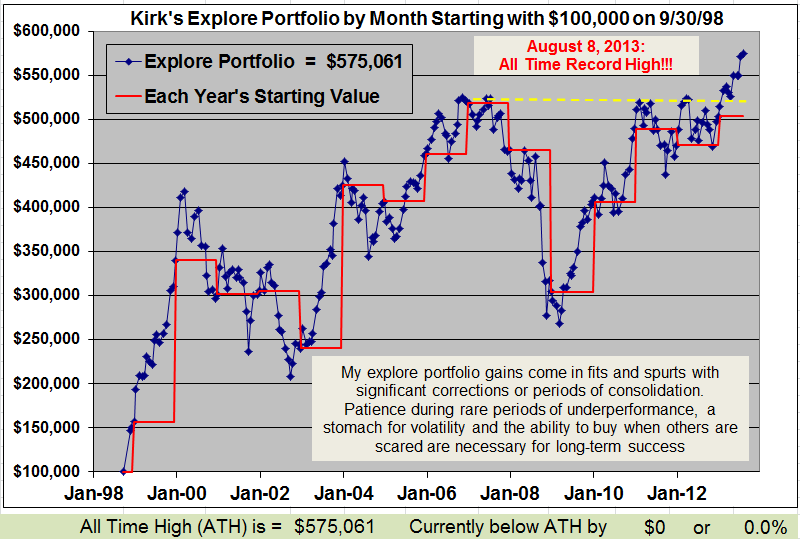
Long Term Results that Speak for Themselves
Since 9/30/98 inception, "Kirk's Newsletter Explore Portfolio" is UP 450%
vs. the S&P500 UP only 106% vs. NASDAQUP only 101% (All through 6/30/13)Since 12/31/98: 9.0% Compound Annual Return vs. 3.7% for the S&P500
(More Info, Testimonials & Portfolio Returns)

From the August 14, 2013 Los Altos Town Crier 

Sunday, December 11, 2011

Richest Cities in America by Total Net Worth

Richest Cities in the US by Zip Code and Net Worth

The richest city in the US according to a a study for Businessweek.com done by a Little Rock data company called the Gadberry Group is Los Altos, California. According to Gadberry, the average http://www.blogger.com/img/blank.gif annual income in Los Altos is $256,476 a year and the total net worth is a cool $1.563,480.

For the full list, see Richest Cities in the US by Zip Code and Net Worth

Wednesday, October 13, 2010

Natural Gas Pipeline Maps

On September 9, 2010 a 30-inch diameter natural gas transmission pipeline (Line 132) owned and operated by Pacific Gas & Electric Company (PG&E) ruptured in a residential area in San Bruno, California. The explosion and fire killed 8 people, destroyed 37 homes and damaged another 18 homes in the blast vicinity. Before and After Photos

We would not want to own a home within the blast zone at any price and would try to avoid homes close to the pipeline that are at risk of destruction from a fire.

These
Natural Gas Pipeline Maps should be useful in selecting a safe place to live.

Before
San Bruno Blast Zone Image Before

After
San Bruno Blast Zone Image After

Sunday, September 19, 2010

FHA Slashing Reverse Mortgage Costs

According to the LA Times, the Federal Housing Administration (FHA) is finalizing plans to reduce the initial mortgage insurance premium on certain loans to 0.01% of a home's value from 2%.

A home-equity conversion mortgage is a federally guaranteed reverse mortgage designed to let homeowners 62 or older tap the equity in their homes. The loans and accrued interest don't have to be repaid until the owner sells the home, dies or fails to live there for one year, but the loans have traditionally carried significant upfront and annual expenses.

According to participants on the conference call, there would be two types of home-equity conversion mortgages beginning this fall: a "standard" loan and a "saver" loan.

The saver loan would have an upfront mortgage insurance premium of 0.01% of a home's value, but the amount that could be borrowed, known as the principal limit, would be reduced by at least 10%. That would lower the risk to the FHA, which guarantees the loans. Because a smaller amount could be borrowed, the saver loan could be marketed as an alternative to a home-equity line of credit to seniors on fixed incomes who can't make the monthly minimum interest payments required on such lines of credit.

Under the standard loan, the upfront mortgage insurance premium charged by the FHA would remain 2% of the property value (or a maximum of 2% of the FHA maximum loan limit of $625,500), and the principal limit would be cut 1% to 5% of a home's value, depending on the borrower's age.

For both loans, the monthly mortgage insurance premium, which is 0.5% of the mortgage balance for a traditional home-equity conversion mortgage, would increase to 1.25%.

According to David Chee , the FHA will reduce Home Equity Conversion Mortgage (HECM) proceeds ands raise premiums in October:

The U.S. Department of Housing and Urban Development (HUD) will increase the annual Mortgage Insurance Premium (MIP) charged on the Home Equity Conversion Mortgage from .50% to 1.25%. Additionally, they will likely reduce the available proceeds from a reverse mortgage by a “single digit” percent. This will take effect in October. 2010. HUD said these changes are necessary to ensure the program is sustainable. The current National Lending Limit is also set to expire on January 1, 2011. It is currently at $625,500 and will return to $417,000 unless Congress extends it. These changes will reduce the proceeds from a reverse mortgage. If you are considering a reverse mortgage in the near future, now is the time to act. If you would like more money and less fees, prior to the reduced benefit change in October, please call David Chee, Vice President and Certified Public Accountant at Seniors Reverse Mortgage Inc. at 1-800-967-3575.


Friday, September 10, 2010

No Money Down Home Loans Are Here Again

The pilot program is called "Affordable Advantage," and it has now been adopted by four states as of Sept. 10, 2010. These are Idaho, Massachusetts, Minnesota and Wisconsin. Other states, such as California, Colorado and Pennsylvania have similar state programs. The deal includes a program to help homebuyers if they become unemployed, lowered fees and there is no requirement that the homebuyer purchase mortgage insurance.

To qualify:

* First time homebuyer
* Credit score above 680
* 30-year fixed rate mortgages only.
* $1,000 down payment. Buyers put in $1,000 and must live in the home.

With a possible $1,000 state housing grant, you pay nothing down!

For more information, see How To Get a No Money Down Home Loan - Affordable Advantage Program

Related Stories

Best Mortgage Rates

Historical Mortgage Rates

Friday, September 3, 2010

Network Capital Mortgage Rates

Below are the mortgage rates for Network Capital.

From Network Capital Mortgage Rates

Fixed Rate Loans as of 9/2/10

30 yr Fixed:3.750% - (3.890% APR)
30 yr FHA: 4.250% - (4.930% APR)
15 yr Fixed:3.375% - (3.700% APR)
5 yr Fixed:3.375% - (3.352% APR)
For More Information, see:

Wednesday, August 11, 2010

Current LIBOR Rates

LIBOR RATES for Aug. 11, 2010

End of Day quotes for LIBOR Rate Quotes
  • 1-week LIBOR Rate = 0.26%
  • 1-Month LIBOR Rate = 0.27%
  • 3-Month LIBOR Rate = 0.38%
  • 1-Year LIBOR Rate = 0.97%
For current LIBOR quotes and charts, see LIBOR Quotes

LIBOR is the London Interbank Offered Rate. It is a daily reference rate based on the interest rates banks in the London wholesale money market (or interbank market) offer to lend unsecured funds to each other. LIBOR is usually slightly higher than the London Interbank Bid Rate (LIBID). LIBID is the rate the same banks are prepared to accept deposits.

For more information, see

Friday, April 23, 2010

Single-Family Home Prices in Gold

Home Price to Gold Price Ratio: Median single-family home price divided by the price of an ounce of gold

Chart of the day says "it currently takes 153 ounces of gold to buy the median single-family home.

This is considerably less that the 601 ounces it took back in 2001.

When priced in gold, the median single-family home is down 75% from its 2001 peak and remains well within the confines of its five-year accelerated downtrend."


Thursday, April 1, 2010

Home Prices Bottomed February 2009

This week Standard & Poors released the January Housing Price Index. While the index showed a small decline from December, prompting some to say that we're in a double-dip, a look at the index over time seems to indicate that we put in a bottom in February 2009 and are leveling out after a little bump last summer. To draw your own conclusions, visit Seattle Bubble and take a look at the raw Home Price Index numbers in the fourth graph down the page.

Tuesday, January 19, 2010

Jim Rogers Says US Bonds & Chinese Property in a Bubble

Jim Rogers, author of “A Bull in China” told Bloomberg News today (Rogers Says Shanghai, Hong Kong Property in Bubble) that Shanghai and Hong Kong property prices may fall after being driven higher by speculative demand.

Rogers says the rest of the Chinese economy is “hardly in a bubble."

“Certainly, Shanghai real estate or Hong Kong real estate should decline.”

“China now realizes that they’ve created too much money, that prices are going up too much and they’re trying to slow things down,” Rogers said. “These things are designed to take some of the heat out of the economy. Let’s hope it works.”

“My goodness, if anything's in a bubble in the world, that and U.S. government bonds are certainly very overpriced.”

Bloomberg reported "China’s property sales jumped 75.5 percent to 4.4 trillion yuan ($644 billion) last year, led by the eastern cities of Zhejiang and Shanghai" while U.S. 10-year treasury notes yield 3.67% and the 20-year average is 5.54%.

More information:


Monday, November 30, 2009

US Mortgage Rates

Mortgage Rates in the United States, the National Average as of 11/30/09.


CURRENT1 MONTH
PRIOR
6 MONTH
PRIOR
1 YEAR
PRIOR
30-Year Fixed4.975.185.085.76
15-Year Fixed4.484.644.785.5
5/1-Year ARM4.244.274.65.95
1-Year ARM3.923.914.285.99
30-Year Fixed Jumbo5.896.086.597.26
15-Year Fixed Jumbo5.445.575.956.45
5/1-Year ARM Jumbo4.814.75.166.18
Data from bankrate.com

For the latest table, see
Best Mortgage Rates - Top Lenders Survey

Friday, September 25, 2009

Single Family Home Prices Inflation Adjusted Chart

Below is a chart showing single family home prices are currently 30% off their peak. The data is adjusted for inflation from 1970 through August 2009.

Chart above and comments below courtesy of chartoftheday.com
  • The median price of a single-family home dropped 2.3% in August.
  • Housing prices are currently 30% off their 2005 peak. In fact, a home buyer who bought the median priced single-family home at the 1979 peak has seen that home appreciate by a mere 4%. Not an impressive performance considering that three decades have passed.
  • Over the past two months, single-family home prices have resumed their decline and remain (until proven otherwise) in an accelerated downtrend.

Saturday, September 12, 2009

Texas Ratios and Cease and Desist Orders

Back from a long Labor Day vacation and another 11 banks have closed in the past 3 weeks. But before I get into the details, Mike has asked about number 45 on my list, Earthstar Bank in Philadelphia.

Earthstar made my original list because of a cease and desist order they got from the FDIC on May 28, 2008. While the official FDIC watch list may be a secret, they do release a list of orders every month including “cease and desist” orders. These are generally released about 2 months after the fact, but they are available at www.fdic.gov. The FDIC cease and desist orders give an insight into not only the bank’s loan portfolio, but also the quality of the bank’s management and quality control.

Earthstar also has a high “Texas ratio.” It wasn’t so high when I started my list, but has continued to rise over the past three quarters. The Texas ratio is a comparison of their non-performing loans to their reserves expressed as a percentage. In the days of the savings and loan debacle, most banks that failed had Texas ratios of over 100 (percent). Earthstar had a Texas ratio of 197 according to their June 30th filing with the FDIC. That means that their non-performing loans were almost twice as much as their reserves. You can look both of these up at nuscho.com.

Now back to my regularly scheduled commentary.

On Friday, August 28th, three banks closed beginning with Bradford Bank in Baltimore. Bradford Bank was operating under two cease and desist orders dated 2-26-09 and its Texas ratio had risen to 631 by the end of the second quarter. Bradford Bank had nine branches and deposits of about $383 million. These have been taken over by Manufacturers and Traders Trust Company (M&T) of Buffalo, New York. The estimated cost to the insurance fund is $97 million or 25 cents on the dollar.

The next bank closed that day was Mainstreet Bank in Forest Lake, Minnesota. Mainstreet Bank was operating under a cease and desist order dated December 12, 2008 and had a Texas ratio that had risen to 692. It was number 51 on my list of banks most likely to fail in 2009. Mainstreet had eight branches and deposits of $434 million which were taken over by Central Bank of Stillwater, MN. The estimated cost to the FDIC insurance fund is $95 million or 22 cents on the dollar.

Two time zones later, Affinity Bank of Ventura, California closed. Affinity had been given a cease and desist order on April 22, 2009 and its Texas ratio had risen to 326. The ten branches and deposits of $922 million were taken over by Pacific Western Bank of San Diego. The estimated cost to the insurance fund is $254 million or 28 cents on the dollar.

Just before the Labor Day weekend, five more banks were closed. Many people, like me, were traveling and missed the news.

First Bank of Kansas City was a small bank. It only had one office and deposits of a mere $15 million. Great American Bank of DeSoto, Kansas has taken over operations. The closing is estimated to cost the FDIC $6 million or 40 cents per dollar. Its Texas ratio was 246.

InBank of Oak Forest, Illinois, had three branches. It too was closed on September 4th. InBank had deposits of $212 million which were taken over by MB Financial Bank of Chicago. You’ll read more about MB Financial Bank later. InBank’s Texas ratio stood at 203. The closing will cost the FDIC insurance fund $66 million or 31 cents per dollar.

Also in Illinois, Platinum Community Bank in Rolling Meadows had two offices. One was in Rolling Meadows. The other was in the offices of Taylor, Bean & Whitaker in Ocala, Florida. Taylor Bean & Whitaker owned the bank. Platinum Community Bank had a Texas ratio of 202, but that didn’t matter. What drove the closure was the fact that Taylor Bean filed for bankruptcy on August 24th. The building has been closed and the FDIC will be mailing checks to account holders who had $305 million on deposit. Federal direct deposits such as Social Security will be redirected to MB Financial Bank’s branch in Palatine, Illinois. The estimated cost to the insurance fund is $114.3 million or 37 cents on the dollar.

Vantus Bank of Sioux City, Iowa had 15 branches. These have now all been taken over by Great Southern Bank of Springfield, Missouri. I’m not sure the name Great Southern will sell well in Sioux City. The Missouri bank should consider setting up another name such as Great Plains State Bank. Vantus Bank had deposits of $368 million and a Texas ratio of 272. The estimated cost to the FDIC insurance fund to make the depositors whole is $168 million or 46 cents per dollar.

First State Bank, Flagstaff, Arizona also closed last week. First State had deposits of $95 million at 6 branches. That makes for some awfully small branches. The bank failed relatively quickly. It got a cease and desist order on May 1st which was announced by the FDIC on June 26th. Its Texas ratio was only 143 at the end of the second quarter. That puts it in the danger zone, but lately the FDIC has had worse banks to deal with. Sunwest Bank of Tustin, California has taken over operations. The estimated cost to the insurance fund is $47 million or 49 cents on the dollar.

Yesterday, three more banks closed.

The first was Corus Bank in Chicago. This was not unexpected. Corus was operating under special oversight of the Office of Thrift Supervision. Its Texas Ratio had skyrocketed to 809. It announced on July 31st, “As of June 30, 2009, Corus' subsidiary, Corus Bank N.A. (the "Bank") had preliminary Tier 1 capital of negative $157 million with a ratio of (2.1)%, and preliminary Tier 1 risk-based capital and total risk-based capital of negative $157 million with a ratio of (3.1)%, as reported in its June 30, 2009 Report of Condition and Income ("Call Report") filed on July 30, 2009. As of June 30, 2009, the Bank was considered "critically undercapitalized" under the regulatory framework for prompt corrective action ("PCA"). ” biz.yahoo.com By citing the “prompt corrective action” regulations, Corus was practically begging to be shut down. Corus was number 63 on my list. Deposits at the eleven Corus branches were $6.6 billion, and these go to MB Financial Bank. MB Financial will only be taking $3 billion of $7 billion in assets though, leaving the task to the FDIC to sell off the other $4 billion. The FDIC estimates the loss to the insurance fund will be $1.7 billion, which is 26 cents on the dollar. With the absorption of accounts from three Illinois banks in the past three weeks, MB Financial adds 14 branches to their 80+ branch network, and $6.8 billion to their $10 billion in deposits.

Brickwell Community Bank, in Woodbury, Minnesota was the second bank closed yesterday. Brickwell had $63 million in deposits at a single office that will be taken over by CorTrust Bank of Mitchell, South Dakota. Brickwell has been under a cease and desist order since March 3rd and had a Texas ratio of 567. The estimated cost to the insurance fund is $22 million or 35 cents on the dollar.

The last bank to close was Venture Bank of Lacey, Washington. Venture Bank had 18 branches and $903 million in deposits. The Texas ratio was… are you ready? 1,243. That means non-performing assets were over 12 times capital reserves. The bank was considered undercapitalized, which in this day of mark-to-hopes-and-dreams accounting, means woefully undercapitalized. They’ve had a Prompt Corrective Action directive since February 13th and haven’t been able to fulfill it. First-Citizens Bank and Trust of Raleigh, North Carolina will be taking over operations. The FDIC had to go 3,000 miles away to find a willing bank for this mess. The FDIC estimates that this will cost the insurance fund (the taxpayers now) $298 million or 33 cents per dollar on deposit.

I was in Washington state last week, and the place definitely seemed to have more banks than the depositors could support. In contrast, across the border at Royal Bank of Canada, the branches were always busy and I was fighting for a parking place.

So I cross off two more banks from my list, leaving 35 banks left on my current list of the 50 65 Banks Most Likely to Close in 2009. I started the list with 50 banks and added some during the first half of the year to grow the list to 65. While the banking environment continues to deteriorate, I don’t think I’ll be adding any more banks to the list this year. There are only 16 weeks left and it’s too hard to guess which ones will close this year and which will hold off until next year. So I think I’ll stand pat and hope for better than 50% on my predictions. (I’m at 46% so far and the year is only 69% complete.)

I may start next year with a list of the 100 banks most likely to fail in 2010.

Anyway, here’s the list with Mainstreet Bank and Corus Bank now crossed off.

65 Banks Most Likely to Close in 2009

1 Magnet Bank, Salt Lake City, UT
2 Citizens Community Bank, Ridgewood, NJ
3 FirstBank Financial Services, McDonough, GA
4 Westsound Bank, Bremerton, WA
5 Suburban Federal Savings Bank, Crofton, MD
6 America West Bank, Layton, UT
7 Silver Falls Bank, Silverton, OR
8 Ocala National Bank, Ocala, FL
9 Sun Security Bank, Ellington, MO
10 Eastern Savings Bank, FSB, Hunt Valley, MD
11 Alliance Bank, Culver City, CA
12 FirstCity Bank, Stockbridge, GA
13 Chestatee State Bank, Dawsonville, GA
14 First Security National Bank, Norcross, GA
15 Ocean Bank, Miami, FL
16 Family Bank and Trust Co., Palos Hills, IL
17 Southern Community Bank, Fayetteville, GA
18 BankCherokee, Saint Paul, MN
19 First Tuskegee Bank, Tuskegee, AL
20 Federal Trust Bank, Sanford, FL
21 Pinnacle Bank, Beaverton, OR
22 Lake Country Community Bank, Morristown, MN
23 Mesa Bank, Mesa, AZ
24 Bank of Wyoming, Thermopolis, WY
25 1st American State Bank of Minnesota, Hancock, MN
26 First State Bank of Altus, Altus, OK
27 EvaBank, Eva, AL
28 Strategic Capital Bank, Champaign, IL
29 Ebank, Atlanta, GA
30 Polk County Bank, Johnston, IA
31 Parkway Bank, Rogers, AR
32 Security Bank of Gwinnett County, Suwanee, GA
33 State Bank of Park Rapids, Park Rapids, MN
34 Herrin Security Bank, Herrin, IL
35 Omni National Bank, Atlanta, GA
36 Northpointe Bank, Grand Rapids, MI
37 Towne Bank of Arizona, Mesa, AZ
38 Timberland Bank, El Dorado, AR
39 Blue Ridge Savings Bank, Inc., Asheville, NC
40 First Piedmont Bank, Winder, GA
41 Select Bank, Grand Rapids, MI
42 Oxford Bank, Oxford, MI
43 Security Bank of North Metro, Woodstock, GA
44 MetroPacific Bank, Irvine, CA
45 Earthstar Bank, Southampton, PA
46 Neighborhood Community Bank, Newnan, GA
47 The Home Savings and Loan Company, Youngstown, OH
48 Heritage Community Bank, Glenwood, IL
49 Vineyard Bank, NA, Rancho Cucamonga, CA
50 Community Bank of Lemont, Lemont, IL
51 Mainstreet Bank, Forest Lake, MN
52 Mutual Bank, Harvey, IL
53 Freedom Bank of Georgia, Commerce, GA
54 Newton County Loan & Savings FSB, Goodland, IN
55 Riverside Bank, Cape Coral, FL
56 BankUnited, Coral Gables, FL
57 American Sterling Bank, Sugar Creek, MO
58 The Park Avenue Bank, New York, NY
59 First Commerce Community Bank, Douglasville, GA
60 Centennial Bank, Ogden, UT
61 Warren Bank, Warren, MI
62 Peoples First Community Bank, Panama City, FL
63 Corus Bank, Chicago, IL
64 Butler Bank, Lowell, MA
65 Republic Federal Bank, Miami, FL

Saturday, August 22, 2009

24 Banks Close in 5 Weeks

It has been 5 weeks since I last updated my bank closing list and a lot has happened in that time. I noted in my July 18th post that the pace of bank closings has picked up and indeed it has.

On Friday, July 24th, seven banks were closed. In Clarence, New York, Waterford Village Bank was closed and Evans Bank took over. Waterford Village Bank had only one office and deposits of about $58 million. The estimated cost to the insurance fund is $5.6 million or 10 cents on the dollar.

On the same day, six banks were closed in Georgia. The six banks were all subsidiaries of Security Bank of Macon, Georgia. The six banks involved were: Security Bank of Bibb County, Macon, GA, with $1 billion in deposits; Security Bank of Houston County, Perry, GA, with $320 million in deposits; Security Bank of Jones County, Gray, GA, with $387 million in deposits; Security Bank of Gwinnett County, Suwanee, GA, with $292 million in deposits; Security Bank of North Metro, Woodstock, GA, with $212 million in deposits; and Security Bank of North Fulton, Alpharetta, GA, with $191 million in deposits. Security Bank of Gwinnett County was number 32 on my list. Security Bank of North Metro was number 43.

The six banks had a total of 20 branches, which reopened as branches of State Bank and Trust Company of Pinehurst, Georgia. The estimated cost to the insurance fund is $807 million or 34 cents per dollar on the total deposits of about $2.4 billion.

On July 31st, five banks were closed.

First State Bank of Altus had one main office and one branch at the local Wal-Mart. It was number 26 on my list. The deposits were taken over by Herring Bank of Amarillo, Texas. First State Bank of Altus had deposits of $98.2 million. The closing is estimated to cost the FDIC $25.2 million or 26 cents per dollar.

Integrity Bank of Jupiter, Florida, with one office, has been taken over by Stonegate Bank of Fort
Lauderdale. Integrity Bank had deposits of $102 million and the closing will cost the FDIC insurance fund $46 million or 45 cents per dollar.

Peoples Community Bank of West Chester, Ohio had 19 branches. These have now all been taken over by First Financial Bank of Hamilton, Ohio. Peoples Community had deposits of $598.2 million and the estimated cost to the FDIC insurance fund to make the depositors whole is $129.5 million or 22 cents per dollar.

First BankAmericano in New Jersey had six branches. They have now been taken over by Crown Bank of Brick, NJ. First BankAmericano had deposits of about $157 million and the cost to the insurance fund is estimated at $15 million or 10 cents per dollar.

The fifth bank to close on July 31st was Mutual Bank of Harvey, Illinois. Mutual Bank has 12 branches and was number 52 on my list. The FDIC had to look far and wide to find someone willing to take over this bank, eventually settling on United Central Bank of Garland Texas. Mutual Bank had deposits of $1.6 billion and the estimated cost to the insurance fund is $696 million or 44 cents per dollar.

On August 7th, two banks in Florida and one in Oregon were closed.

First State Bank of Sarasota had nine branches with deposits of $387 million. These have now been taken over by Stearns Bank from St. Cloud, Minnesota. Stearns Bank is establishing quite a presence in the Sarasota area because they also took over the four branches of Community National Bank of Sarasota County. Community National Bank had deposits of $93 million. The FDIC estimates the cost to the insurance fund for these two bank failures at $116 million and $24 million, or 30 cents on the dollar and 26 cents on the dollar respectively.

Community First Bank of Prineville, Oregon also closed on August 7th. Community First had eight branches and deposits of approximately $182 million. The offices were reopened by Home Federal Bank of Nampa, Idaho. The cost to the FDIC is estimated at $45 million or 25 cents on the dollar.

Last week, five banks closed including two in Arizona.

Dwelling House Savings and Loan of Pittsburgh closed its one tiny office which was taken over by Pittsburgh banking giant PNC Bank, NA. If you recall, PNC bought up National City Bank, a regional bank based in Cleveland with bail-out money in a deal announced last October. Dwelling House had deposits of a mere $13.8 million and the deal is expected to cost the FDIC $6.8 million or 49 cents on the dollar.

The big closure last week was Colonial Bank of Montgomery, Alabama. Colonial Bank had 346 branches in five states. The entire network with $20 billion in deposits spread across Alabama, Florida, Georgia, Texas and Nevada was taken over by BB&T of Winston-Salem. The estimated cost to the insurance fund is $2.8 billion, which, by some accounts, is more than the FDIC has left.

The empty insurance fund hasn't stopped the FDIC from shutting down more banks. Union Bank in Gilbert, Arizona and Community Bank of Arizona in Phoenix were also shut down last week and their operations were taken over by MidFirst Bank of Oklahoma City. Union Bank had one office with $112 million in deposits and Community Bank of Arizona had four branches with $143.8 million in deposits. In the case of Union Bank, most of the money was hot brokered deposits. $88 million was in brokered deposits and only $24 million was from local retail customers. MidFirst Bank will not be taking over the brokered deposits. The cost to the FDIC is estimated at $61 million and $25.5 million or 54 cents on the dollar and 18 cents on the dollar respectively. It's a sign of the times that Union Bank was allowed attract 78% of their deposit base through high-yielding FDIC-insured CDs and then lose over 50 cents on the dollar before it was shut down by regulators. Union Bank needed to be shut down and it should have been closed long ago.

The fifth bank to be closed last week was a bank nobody wanted. Community Bank of Nevada had 12 branches and deposits of $1.38 billion. The FDIC set up a temporary bank, called the Deposit Insurance National Bank to give depositors 30 days to close their accounts and transfer their money elsewhere. Nevada State Bank has agreed to lend a few people to staff the temporary bank. This give time for existing checks to clear before customers have to close their checking accounts. The estimated cost to the insurance fund is $781.5 million or a whopping 57 cents on the dollar. I guess they like to gamble in Las Vegas.

Which brings us to yesterday when another four banks were closed.

Two of the banks were in Georgia. ebank, with one office in Atlanta was closed and the operations and $130 million in deposits were taken over by Stearns Bank of St. Cloud, Minnesota. This follows Stearns Bank's takeover of two banks in Florida August 7th. ebank was number 29 on my list. The cost to the insurance fund is estimated to be $63 million or 48 cents on the dollar.

The second Georgia bank to close was First Coweta of Newnan. First Coweta had deposits of $155 million at four branches. These will be taken over by United Bank of Zebulun, Georgia. The estimated cost to the FDIC is $48 million or 31 cents on the dollar.

CapitalSouth Bank in Birmingham was also closed. CapitalSouth had deposits of $546 million at ten branches. The operations will be taken over by IBERIABANK of Lafayette, Louisiana. The FDIC estimates the cost to the insurance fund will be $151 million or 28 cents on the dollar.

The big one yesterday was Guaranty Bank of Austin. Guaranty Bank had 103 branches in Texas and 59 branches in California. Total deposits were approximately $12 billion. The deposits and branches will be taken over by BBVA Compass which is owned by Banco Bilbao Vizcaya Argentaria SA, the second-largest bank in Spain. BBVA Compass adds to their 579 branches across the south. Sister bank BBVA Bancomer has another 32 former Valley Bank branches in California. The FDIC estimates the cost of closing Guaranty Bank at $3 billion or 25 cents on the dollar.

So I cross off five more banks from my list, leaving 37 banks left on my current list of the 50 65 Banks Most Likely to Close in 2009.

1 Magnet Bank, Salt Lake City, UT
2 Citizens Community Bank, Ridgewood, NJ
3 FirstBank Financial Services, McDonough, GA
4 Westsound Bank, Bremerton, WA
5 Suburban Federal Savings Bank, Crofton, MD
6 America West Bank, Layton, UT
7 Silver Falls Bank, Silverton, OR
8 Ocala National Bank, Ocala, FL
9 Sun Security Bank, Ellington, MO
10 Eastern Savings Bank, FSB, Hunt Valley, MD
11 Alliance Bank, Culver City, CA
12 FirstCity Bank, Stockbridge, GA
13 Chestatee State Bank, Dawsonville, GA
14 First Security National Bank, Norcross, GA
15 Ocean Bank, Miami, FL
16 Family Bank and Trust Co., Palos Hills, IL
17 Southern Community Bank, Fayetteville, GA
18 BankCherokee, Saint Paul, MN
19 First Tuskegee Bank, Tuskegee, AL
20 Federal Trust Bank, Sanford, FL
21 Pinnacle Bank, Beaverton, OR
22 Lake Country Community Bank, Morristown, MN
23 Mesa Bank, Mesa, AZ
24 Bank of Wyoming, Thermopolis, WY
25 1st American State Bank of Minnesota, Hancock, MN
26 First State Bank of Altus, Altus, OK
27 EvaBank, Eva, AL
28 Strategic Capital Bank, Champaign, IL
29 Ebank, Atlanta, GA
30 Polk County Bank, Johnston, IA
31 Parkway Bank, Rogers, AR
32 Security Bank of Gwinnett County, Suwanee, GA
33 State Bank of Park Rapids, Park Rapids, MN
34 Herrin Security Bank, Herrin, IL
35 Omni National Bank, Atlanta, GA
36 Northpointe Bank, Grand Rapids, MI
37 Towne Bank of Arizona, Mesa, AZ
38 Timberland Bank, El Dorado, AR
39 Blue Ridge Savings Bank, Inc., Asheville, NC
40 First Piedmont Bank, Winder, GA
41 Select Bank, Grand Rapids, MI
42 Oxford Bank, Oxford, MI
43 Security Bank of North Metro, Woodstock, GA
44 MetroPacific Bank, Irvine, CA
45 Earthstar Bank, Southampton, PA
46 Neighborhood Community Bank, Newnan, GA
47 The Home Savings and Loan Company, Youngstown, OH
48 Heritage Community Bank, Glenwood, IL
49 Vineyard Bank, NA, Rancho Cucamonga, CA
50 Community Bank of Lemont, Lemont, IL
51 Mainstreet Bank, Forest Lake, MN
52 Mutual Bank, Harvey, IL
53 Freedom Bank of Georgia, Commerce, GA
54 Newton County Loan & Savings FSB, Goodland, IN
55 Riverside Bank, Cape Coral, FL
56 BankUnited, Coral Gables, FL
57 American Sterling Bank, Sugar Creek, MO
58 The Park Avenue Bank, New York, NY
59 First Commerce Community Bank, Douglasville, GA
60 Centennial Bank, Ogden, UT
61 Warren Bank, Warren, MI
62 Peoples First Community Bank, Panama City, FL
63 Corus Bank, Chicago, IL
64 Butler Bank, Lowell, MA
65 Republic Federal Bank, Miami, FL

Saturday, August 1, 2009

Foreclosure Facts, Figures and Charts Tell a Scary Story

These facts tell a scary story. 20% of homeowners are "upside down" in their mortgage meaning their home is worth less than what they owe. So far, 1.5 million homes have been lost to foreclosure and projections are 13 million will be lost over the next five years.

The Center for Responsible Lending says
"1 in 10 families is behind on their mortgage. The latest available figures show that the number of households at risk of foreclosure is 700% higher than the number of loan modifications, and the gap has been increasing steadily."
Click chart for full size image

More facts from Center for Responsible Lending:

15 Fast Facts

1.

Number of loans already lost to foreclosure

1.5 million

2.

Projected foreclosures on all types of loans during the next 5 years

13 million

3.

Portion of all homeowners late on their mortgage

1 in 10

4.

Portion of homes where owners owe more than property value

Nearly 1 in 5

5.

Drop in residential lending from 2008 compared to 2007

Over a trillion

6.

Between 2006 and 2008, % decline in existing home sales

24%

7.

Between 2006 and 2008, % decline in new home sales

54%

8.

Between 2006 and 2008, % decline in new construction

58%

9.

In 2009, number of neighboring homes that will lose property value because of nearby foreclosures

69+ million

10.

Average price decline per home (2009)

$7,200

11.

Total property value lost because of nearby foreclosures (2009)

$502 billion

12.

Percentage of 2006 subprime loans that went to people who could have qualified for prime loans with better terms

61%

13.

Typical rate difference between a 30-year, fixed mortgage and the initial rate of aggressively marketed ARM loans

½ to 8/10%

14.

Cumulative default rate for recent subprime borrowers with a similar risk profile to borrowers with lower-rate loans

More than 3x higher

15.

During first four years of a loan, the typical extra cost paid by subprime borrowers who get a loan from a mortgage broker, compared to other borrowers with similar characteristics

$5,222

Saturday, July 25, 2009

Libor Rates Make New Historic Low

London Interbank Offered Rates (LIBOR) set a new historical low this week. The short term, 1-month LIBOR rate is down to a new record low at only 0.29% from 2.46% just a year ago.

This is This table shows all LIBOR rates are down significantly from a year ago.

Updated 7/25/2009 This week Month ago Year ago
1 Month LIBOR Rate 0.29 0.31 2.46
3 Month LIBOR Rate 0.50 0.61 2.80
6 Month LIBOR Rate 0.96 1.15 3.14
1 Year LIBOR Rate 1.49 1.74 3.26

New historical lows shown in red


###### LIBOR ###### Prime Fed

1 Mo 3 Mo 6 Mo 1 Yr Rate Funds


Rate
Current % 0.29 0.50 0.96 1.49 3.25 0.25
Min % 0.29 0.50 0.96 1.46 3.25 0.25
Max % 6.94 6.85 7.07 5.43 9.5 7.063

See Libor Rates at a Glance for current rates and graphs.

Definition: LIBOR is the London Interbank Offered Rate. It is a daily reference rate based on the interest rates banks in the London wholesale money market (or interbank market) offer to lend unsecured funds to each other. LIBOR is usually slightly higher than the London Interbank Bid Rate (LIBID). LIBID is the rate the same banks are prepared to accept deposits.

Tuesday, July 21, 2009

Meanwhile, down at the Treasury


Faster! Faster! The deficit has topped $1,000,000,000,000!

Saturday, July 18, 2009

Pace of Bank Closings Picks Up

Last week, only one bank was closed in the US. That was Bank of Wyoming, number 24 on my list of banks most likely to close in 2009. Bank of Wyoming had only one office and deposits of just $67 million. Its operation has been taken over by Central Bank & Trust in Lander, WY. The estimate cost to the insurance fund is $27 million or 40 cents on the dollar.

This week, four banks were closed. The largest was Vineyard Bank, NA in Rancho Cucamonga, CA which was number 49 on my list. Vineyard Bank had 16 offices had deposits of about $1.6 billion. The offices and accounts have been transferred to California Bank & Trust. The estimated cost to the insurance fund is $579 million or 36 cents on the dollar.

Close behind is Temecula Valley Bank with eleven branches in California and deposits of $1.3 billion. The offices and accounts will be taken over by First-Citizens Bank of Raleigh, NC with an estimated cost to the insurance fund of $391 million or 30 cents per dollar on deposit.

BankFirst with just 2 offices in Sioux Falls and Minneapolis will be taken over by Alerus Financial, NA. Alerus will operate the South Dakota office as First Dakota National Bank and will operate the Minnesota office as Alerus Financial, NA. BankFirst had deposits of $254 million and assets of $275 million. Alerus will take only $72 million of the assets while Beal Bank Nevada will take $177 million in loans. The remaining assets will stay with the FDIC until they can find someone willing to take them. The closing is estimated to cost the FDIC $91 million or 36 cents per dollar.

Down in Georgia, First Piedmont Bank, also with 2 offices, has been taken over by First American Bank and Trust of Athens, GA. First Piedmont Bank had deposits of $115 million and the closing will cost the FDIC insurance fund $29 million or 25 cents per dollar.

Four banks closed this week, one last week plus seven closed on July 2nd makes 12 banks closed in the first three weeks of July, double the pace of the first half of the year.

Striking three more, there are 42 banks left on my current list of the 50 65 Banks Most Likely to Close in 2009.

1 Magnet Bank, Salt Lake City, UT
2 Citizens Community Bank, Ridgewood, NJ
3 FirstBank Financial Services, McDonough, GA
4 Westsound Bank, Bremerton, WA
5 Suburban Federal Savings Bank, Crofton, MD
6 America West Bank, Layton, UT
7 Silver Falls Bank, Silverton, OR
8 Ocala National Bank, Ocala, FL
9 Sun Security Bank, Ellington, MO
10 Eastern Savings Bank, FSB, Hunt Valley, MD
11 Alliance Bank, Culver City, CA
12 FirstCity Bank, Stockbridge, GA
13 Chestatee State Bank, Dawsonville, GA
14 First Security National Bank, Norcross, GA
15 Ocean Bank, Miami, FL
16 Family Bank and Trust Co., Palos Hills, IL
17 Southern Community Bank, Fayetteville, GA
18 BankCherokee, Saint Paul, MN
19 First Tuskegee Bank, Tuskegee, AL
20 Federal Trust Bank, Sanford, FL
21 Pinnacle Bank, Beaverton, OR
22 Lake Country Community Bank, Morristown, MN
23 Mesa Bank, Mesa, AZ
24 Bank of Wyoming, Thermopolis, WY
25 1st American State Bank of Minnesota, Hancock, MN
26 First State Bank of Altus, Altus, OK
27 EvaBank, Eva, AL
28 Strategic Capital Bank, Champaign, IL
29 Ebank, Atlanta, GA
30 Polk County Bank, Johnston, IA
31 Parkway Bank, Rogers, AR
32 Security Bank of Gwinnett County, Suwanee, GA
33 State Bank of Park Rapids, Park Rapids, MN
34 Herrin Security Bank, Herrin, IL
35 Omni National Bank, Atlanta, GA
36 Northpointe Bank, Grand Rapids, MI
37 Towne Bank of Arizona, Mesa, AZ
38 Timberland Bank, El Dorado, AR
39 Blue Ridge Savings Bank, Inc., Asheville, NC
40 First Piedmont Bank, Winder, GA
41 Select Bank, Grand Rapids, MI
42 Oxford Bank, Oxford, MI
43 Security Bank of North Metro, Woodstock, GA
44 MetroPacific Bank, Irvine, CA
45 Earthstar Bank, Southampton, PA
46 Neighborhood Community Bank, Newnan, GA
47 The Home Savings and Loan Company, Youngstown, OH
48 Heritage Community Bank, Glenwood, IL
49 Vineyard Bank, NA, Rancho Cucamonga, CA
50 Community Bank of Lemont, Lemont, IL
51 Mainstreet Bank, Forest Lake, MN
52 Mutual Bank, Harvey, IL
53 Freedom Bank of Georgia, Commerce, GA
54 Newton County Loan & Savings FSB, Goodland, IN
55 Riverside Bank, Cape Coral, FL
56 BankUnited, Coral Gables, FL
57 American Sterling Bank, Sugar Creek, MO
58 The Park Avenue Bank, New York, NY
59 First Commerce Community Bank, Douglasville, GA
60 Centennial Bank, Ogden, UT
61 Warren Bank, Warren, MI
62 Peoples First Community Bank, Panama City, FL
63 Corus Bank, Chicago, IL
64 Butler Bank, Lowell, MA
65 Republic Federal Bank, Miami, FL

Friday, July 17, 2009

Hitting Bottom and the New Normal

Signs are beginning to point out that the economy may have hit bottom May 31st. Housing, which led us into this recession, will probably still continue to drop in most markets, but the larger economy seems to have adjusted to the slide in housing.

GM and Chrysler have been through bankruptcy and auto sales seem to have ended their slide. Fathers, it seems, got a new tool for Father's Day and have decided to put it to use. One home improvement retailer I frequent seems to have made it through the winter and spring selling garden gloves, cheese balls and M&M candies. Now, those going through the checkout seem to have something in the basket that can actually be installed in the home. Purchases are still small. They're not buying pallet loads of lumber and drywall, but something to fix up or pretty up the home that they are stuck with.

Unlike last summer, gasoline prices are more moderate and more stable. Heating prices this winter, especially natural gas, also looks to be more moderate and stable. A new natural gas pipeline across the prairie states called the Rocky Mountain Express is bringing gas to the Midwest and East Coast from Colorado and Wyoming, reducing our purchases from Canada. And while CIT's future is very uncertain right now, we've been able to make it through the first half of the year without a major financial disruption on the order of Lehman Brothers, AIG, IndyMac, Bear Sterns, Merrill Lynch or WaMu.

Businesses seem to have adjusted to what I call "the new normal". In many cases that required writedowns, layoffs and a change in business strategy. Many businesses have made the necessary cuts and are now poised to make a profit again. It won't be as heady as before, but profits can be made. Those firms that have engaged in creative accounting (often for their very survival) will be continuing to take writedowns for many quarters to come. In the real estate market in particular, there is a lot of inventory out there that is still priced unrealistically high. Generally, those properties are "upside down" and the owners or banks don't want to (or can't afford to) book the losses. So they continue to price the property to wishful thinking.

The following chart shows the home price history in Denver and Minneapolis. These cities are sunny in the summer and snowy in the winter. The seasonal effects have been pronounced. I think Denver's prices have stabilized but Minneapolis is due for one more year of losses before recovering next spring.

Tuesday, July 14, 2009

Under 5% Mortgages from Charles Schwab Bank

Schwab Bank has fixed rate, conforming mortgage loans from under 5.00%.

From Charles Schwab Bank Mortgage Loan Rate:

Fixed Conforming Loans (For Loan Amounts of $417,000 or Less)

Fixed Rated as of 07/14/09


Rate
Points
APR
30yr Fixed5.375
5.16
0.0
1.0
5.405
5.28
25yr Fixed5.375
5.16
0.0
1.0
5.41
5.297
20yr Fixed5.25
4.96
0.0
1.0
5.291
5.121
15yr Fixed4.875
4.66
0.0
1.0
4.927
4.864
10yr Fixed4.875
4.66
0.0
1.0
4.949
4.952


See Charles Schwab Bank Mortgage Rates for contact information and current rates for fixed and adjustable mortgage loans.